

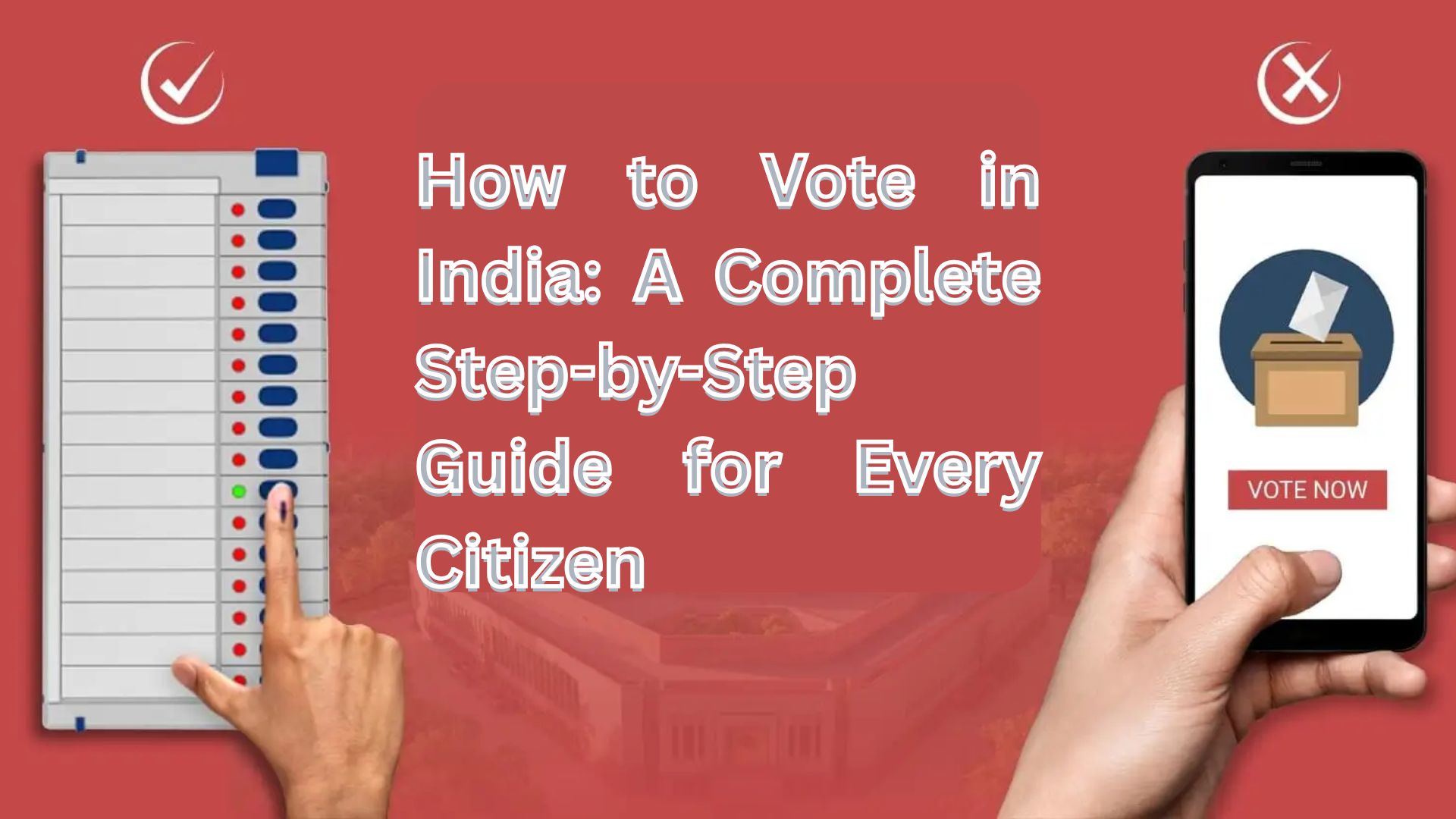
Voting is the backbone of democracy, and in a country as large and diverse as India, it plays a crucial role in shaping the nation’s future. From choosing local representatives to electing the central government, voting gives citizens the power to influence decisions that affect their daily lives. Yet, many people—especially young and first-time voters—still feel unsure about how to vote in India or even how to register to vote in India.

This guide explains the entire process in a simple, clear, and practical way, so every eligible citizen can participate confidently.
Why Voting Is Important in India
India is the world’s largest democracy, and voting is the strongest tool citizens have to express their opinions. Every vote contributes to decisions related to education policies, healthcare systems, employment opportunities, infrastructure development, and national security.
Understanding how to vote in India ensures that your voice is not lost. Even if you feel one vote doesn’t matter, history has shown that many elections are decided by narrow margins. Active participation strengthens democratic values and keeps the system accountable.
Who Can Vote in India?
Before learning about the voting process, it’s important to know eligibility criteria.
You are eligible to vote in India if:
- You are a citizen of India
- You are 18 years of age or older on the qualifying date
- Your name is listed in the electoral roll
If your name is not listed, you must first learn how to register to vote in India, as registration is mandatory for voting in any election.
How to Register to Vote in India
Voter registration is the first step in the democratic process. Without registration, even eligible citizens cannot vote.
Documents Required for Voter Registration
To complete how to register vote India, you generally need:
- Proof of age (Birth certificate, Aadhaar card, or school certificate)
- Proof of address (Aadhaar card, passport, utility bill, rent agreement)
- Passport-size photograph
Having correct and updated documents helps avoid delays or rejection of your application.
Online Voter Registration Process
Digital services have made how to register to vote India simple and accessible for everyone.
Steps to register online:
- Visit the National Voters’ Service Portal (NVSP)
- Select “Register as a New Voter”
- Fill out Form 6 carefully with accurate details
- Upload scanned copies of required documents
- Submit the form and save the reference number
After verification by election officials, your name is added to the voter list, and your voter ID card is issued.
Offline Voter Registration Process
For those who are not comfortable with online registration, offline registration is also available.
Offline steps include:
- Collect Form 6 from the local electoral office or BLO
- Fill in personal and address details
- Attach photocopies of necessary documents
- Submit the form to the Booth Level Officer
This method ensures inclusivity, especially for rural residents and senior citizens.
What Is a Voter ID and Why Is It Important?
A Voter ID (EPIC) is an official identity document issued by the Election Commission of India. It confirms your eligibility to vote and prevents duplication or misuse of votes.
Even after learning how to vote in India, carrying a valid voter ID or approved alternative document on election day is essential. It ensures smooth verification at the polling booth.
How to Vote in India on Election Day
Once registered, the voting process itself is straightforward and secure.
Step-by-Step Voting Process
- Check your polling booth location in advance
- Carry your voter ID or approved ID proof
- Reach the polling station within voting hours
- Get your identity verified by election officials
- Proceed to the Electronic Voting Machine (EVM)
- Press the button next to your chosen candidate
- Confirm your vote on the VVPAT screen
After this, your vote is successfully recorded, and you can leave the booth confidently.
Understanding Electronic Voting Machines (EVMs)
EVMs are designed to ensure transparency, accuracy, and fairness. Each machine is sealed, tested, and monitored under strict security protocols.
The VVPAT system allows voters to visually confirm their vote, increasing trust in the electoral process. Knowing this helps voters feel more confident about how to vote in India.
Common Mistakes to Avoid While Voting
Many voters face issues due to small but avoidable mistakes.
Common mistakes include:
- Not checking your name on the voter list beforehand
- Carrying invalid or expired identity proof
- Visiting the wrong polling station
- Attempting to use mobile phones inside the booth
Being aware of these points ensures a smooth voting experience.
Special Voting Facilities in India
India provides special voting options for certain categories of voters:
- Postal ballots for senior citizens and disabled voters
- Proxy voting for armed forces personnel
- Assisted voting for visually impaired citizens
These measures ensure that every eligible voter can exercise their right.
Why First-Time Voters Should Vote
First-time voters often feel nervous or unsure. However, learning how to register to vote in India and participating early builds civic awareness and responsibility.
Voting encourages informed decision-making and helps young citizens understand governance and public accountability from an early stage.
Conclusion: Your Vote Is Your Responsibility
Understanding how to vote in India is more than just knowing the steps—it’s about taking responsibility as a citizen. From learning how to register to vote in India to casting your vote confidently, every stage plays a vital role in democracy.
Every vote counts. Make sure yours does too.
Read More – Two Year Programme for NEET 11th
